Freaks or Future? – Day 8 NaBloPoMo 2015

Late last week, Woolworths Australia released a new advertisement, featuring high profile personal trainer Michelle Bridges. The ad is spruiking a new line of frozen meals the supermarket chain developed with Bridges. During the advertisement, Bridges described people who grow their own food as “freaks” and suggested that precooked frozen food was preferable to fresh fruit and vegetables. As you can probably imagine, the uproar on social media was big enough to make the supermarket pull the ad almost immediately. There’s an article worth reading at the Guardian Australia.

Well, I guess I’ve been called worse in my time.

But it got me thinking about all the ways growing my own food makes me healthier and happier. First and foremost, I get a lot of physical exercise all year round gardening. Some of you might be aware I have a degenerative spinal condition, coupled with body-wide osteoarthritis. Over ten years ago, my then GP told me that I’d most likely be in a wheelchair within a couple of years. Not bloody likely! Occasionally, it lays me low and I need to use a walking stick but fortunately, acute episodes are rare these days. My current GP is convinced that my half an hour minimum in the garden has improved my core strength, muscle mass and general well-being – not to mention raise my normally low vitamin D levels and provide me with food.

And then there’s the food.

I started gardening at this house a week after we moved in, almost six years ago. I have potatoes for eight or nine months of the year and free range eggs about ten months. I grow enough garlic now for almost the whole year. I still buy brown onions and some carrots but stopped buying salad greens and herbs after about three months. The last couple of years I’ve been breeding meat rabbits as an ethical source of protein and I’m researching growing mushrooms and installing a beehive next spring. I’ve tweaked my salad greens into seasonal delights, and now we look forward to winter too because that means sweet, frosted kale, silverbeet, chicory, endives, corn salad and (my favourite) English spinach.

Baby raspberries

Baby raspberries

Fruit begins with rhubarb in September, and progresses through strawberries November and December, raspberries, boysenberries, youngberries, loganberries, silvanberries and (for the first time this year) blueberries from December to April and apricots, nectarines and plums from January to the end of March. I also have a peach and double graft apple I’m espaliering that will probably fruit next summer and a lemon tree that will be planted out in the autumn. And everything is picked fresh the day it’s needed so the nutrient levels are high.  There is excess – I always grow too much – but it’s given to family and friends and I make cider and peri with excess fruit, fruit leather and dried chillies, beans and kale chips as well as freezing.
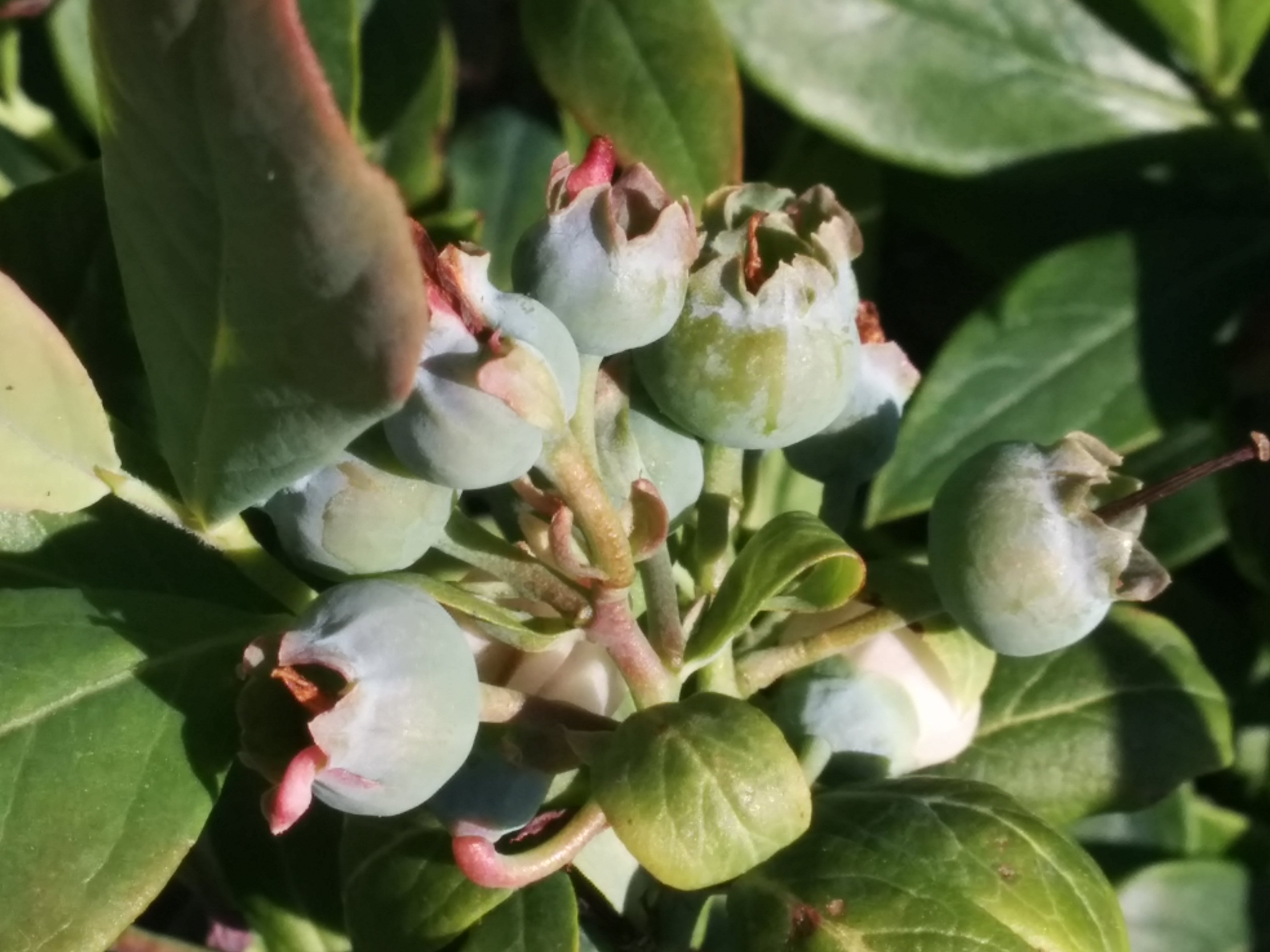
Blueberries starting to form

Blueberries starting to form

Also there’s a creative aspect of getting my hands in the earth – it makes me feel good about the world and gives me inspiration to write. When I’m in the garden, I lose all track of time and get to think about things I need to. I’ve solved some really big problems over the years out in that garden. I plan and plot and think about the season to come as well as the one I’m living in, it’s a window to the future.

And finally, there’s those wonderful moments when you can sit back, rest, enjoy and just be…………….. ❤

My favourite spot under the Chestnut tree

My favourite spot under the Chestnut tree
New Life – Day 7 NaBloPoMo 2015

Let’s start with a disclaimer. Apart from writing, performing, teaching and gardening, I keep chickens for eggs and breed rabbits as an ethical meat supply for my family. If this isn’t your thing, don’t bother reading any further – I don’t want to cause anyone any distress.

I had a wonderful day today – I spent most of it in the garden and the rest of it with my adult son, who’s recently returned from overseas 😀

This morning when I fed all the hungry beasts (six chickens and three rabbits) I had a talk to my gorgeous British Giant doe, Boudica. She had a “date” with my buck Beelzebun about a month ago and she was singularly unimpressed with his romantic advances – to the point where she drew blood on the poor boy! I really wasn’t sure if she was pregnant (she is a big girl!) and concerned that I’d have to rethink my breeding strategy for this season. My neighbour Karen was feeding her two pet bunnies and came with me to see Boudica in the nursery hutch.

Boudica, Queen of Rabbits

Boudica, Queen of Rabbits

To our tremendous delight, we discovered seven little baby buns, wrapped in some of Boudica’s super soft belly fur in the nesting box. It was really lovely to share this with Karen, she is another person who is very dear to me and  loves bunnies. No matter how often it happens, I always get a thrill from seeing new life in the yard.

Occasionally I sell a litter, some to other breeders and some as pets. Full grown, they are as big as a large cat and very placid and gentle creatures. But primarily I breed to provide an ethical meat supply to my family. I have a buck and two does and all three are much loved pets and with an average of nine kits per litter, I’m careful not to over service the girls.

IMG_20151107_161051

The rest of the day I spent pricking out seedlings into home made grow tubes, giving Boudica raspberry leaves, collecting rhubarb seed and cutting back the kale flowers, a regular task this time of year which has become a bit of a weekly event.

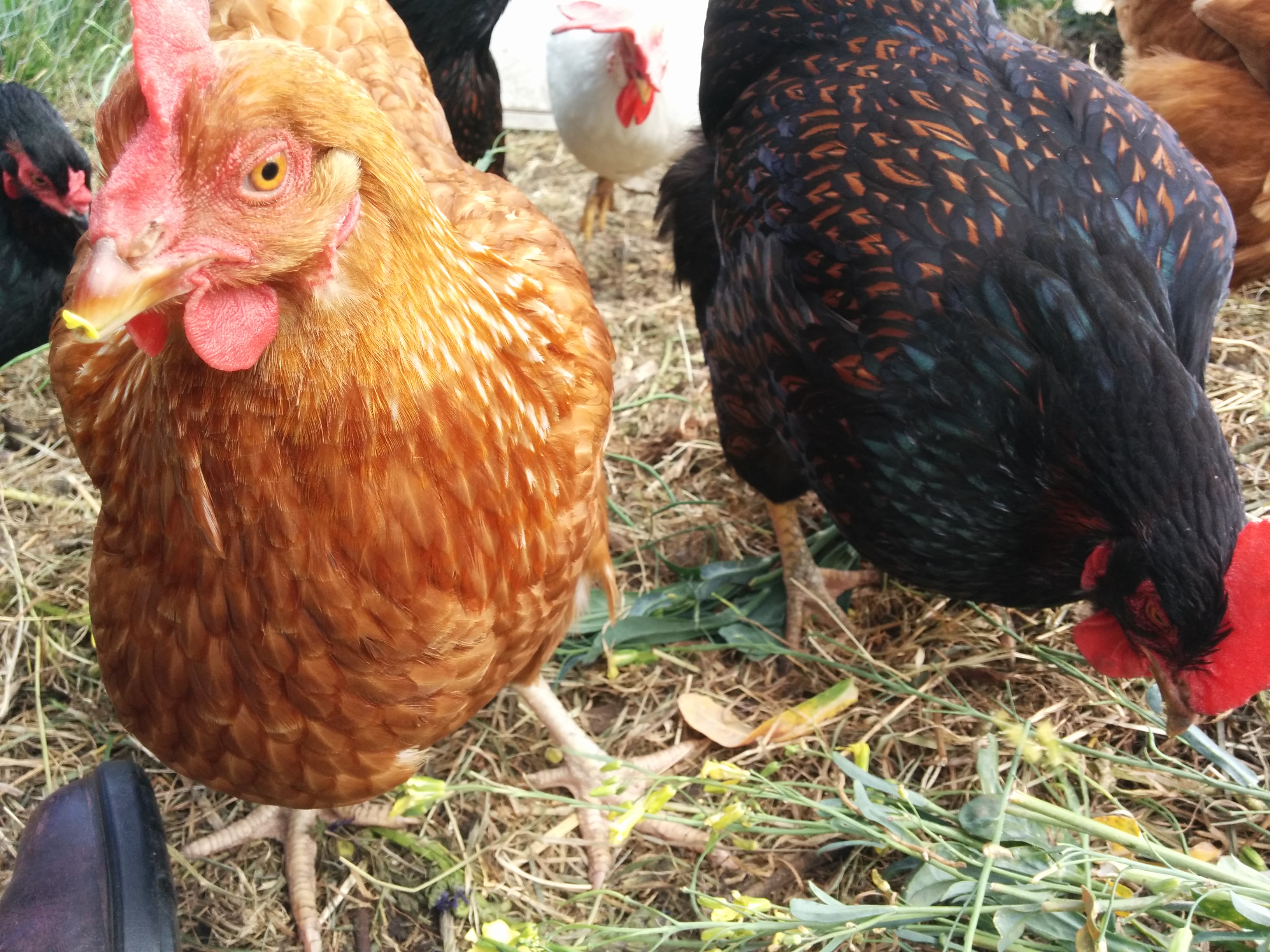
My chickens adore kale, so every week I take a big bunch into their yard and chop it up for them. It made me realise how well the two new Isa Brown hens, B1 and B2 have integrated into the flock. They came from a local egg farmer about three months ago, who lets his chickens free range during the day and roost and lay in a barn at night. When the girls arrived, they were looking a little shabby and thin but they were extremely interested in food. There were a few weeks of pecking and chasing by the other hens, establishing the new pecking order, which really didn’t help. B1 in particular went through a full moult and was especially timid.

Today I was very conscious of how healthy they are now, fully feathered and with bright red crops – and how well they’ve assimilated into their new home. It’s taken time and quite a bit of patience, but the work has paid off and the hens are happy, very well fed and laying. B1 is still timid but a very sweet little hen, who likes to sit in my lap and peck my mobile phone when I try to take her picture ❤

B1 with Mephisto the Beautiful Barnevelder

B1 with Mephisto the Beautiful Barnevelder

Friday at Last! – Day 6 NaBloPoMo 2015

Well, it’s finally the end of the week, and I’m bushed! I was supposed to go to a gig tonight some friends are playing but I’m just too tired. Tomorrow, I’ll be out in the garden again and cooking a family dinner – my son’s coming over.

One of my jobs tomorrow is dealing with some of the seedlings I’ve grown in the last month. I love sitting in my greenhouse, listening to music or audio books while I work. It’s very relaxing.

With small seeds, such as chillies, herbs, salad greens and any brassicas (cabbage family, such as kale, broccoli and mustard greens) I use a three stage process.

First, I plant the seeds in punnets, keep them moist in the greenhouse and wait for the magic of new plants to happen. It’s silly but even after all these years I still get a thrill when I see new plants starting 🙂

New vegetables!

New vegetables!

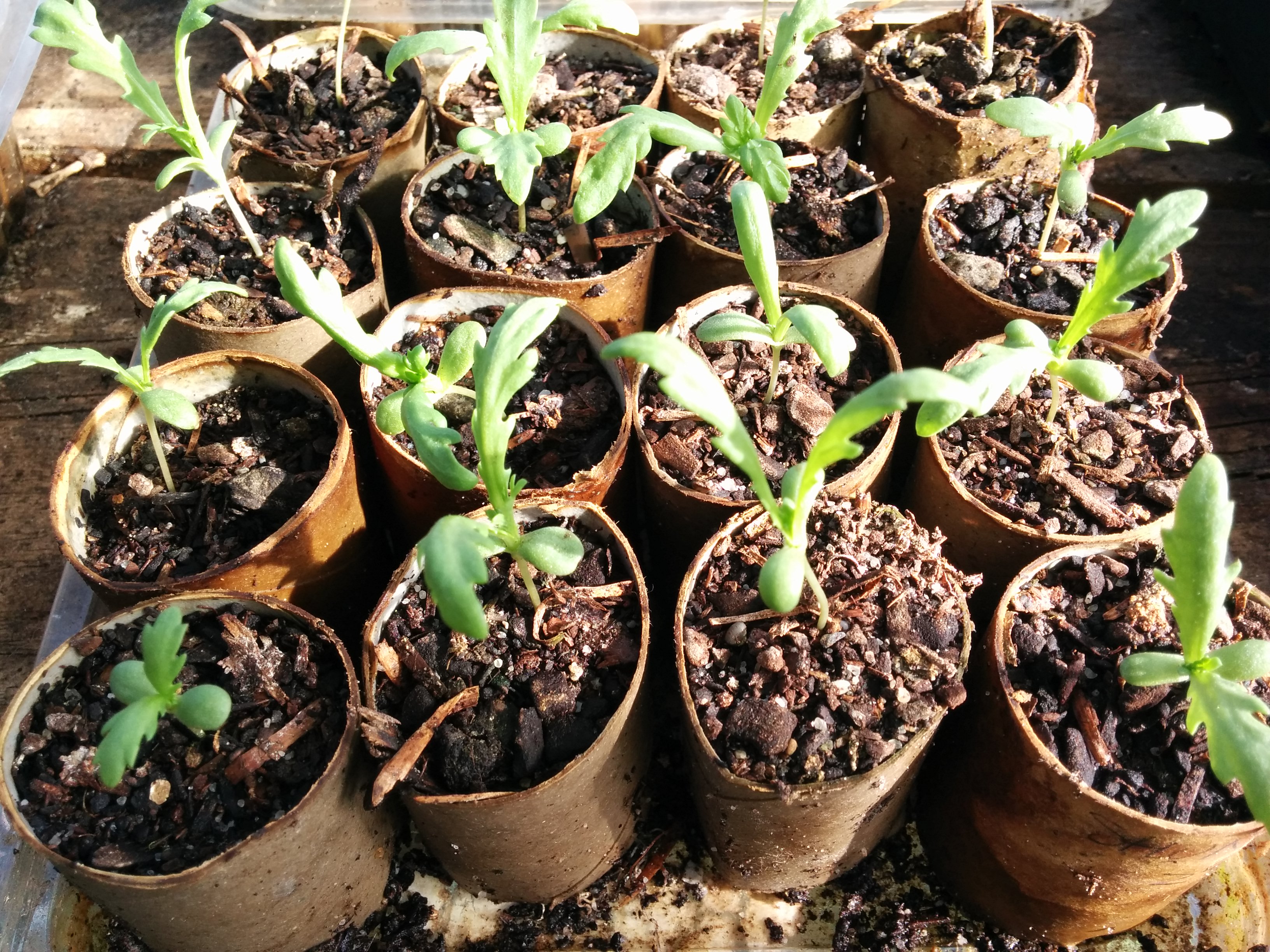
Secondly, I prick them out from the punnets into cardboard toilet rolls and let them grow on in the greenhouse until the roots are showing, which encourages downward root growth and eliminates transplant shock – one of the biggest killers of young seedlings. I didn’t realise until recently that this isn’t common knowledge! I cut the rolls in half first, which makes a perfect size for me and it doubles the number of  mini grow tubes I have for the season. I’ve found that plastic trays from my few supermarket purchases are great to put the completed seedling tubes in, making them safe to carry around the greenhouse and the yard.

All recycled and ready to go!

All recycled and ready to go!

The cardboard is just the right thickness to take up and hold moisture without falling apart immediately and I use a fairly compost-rich potting mix that holds together reasonably well. Like a lot of repetitive jobs, there’s a rhythm I get into when doing this. Perhaps it’s the musician taking over but I find this really relaxing. It takes practice when doing small, delicate seedlings but the best tip I can offer is go slowly – there’s no rush. Also, keep a permanent marker handy and I recommend marking the plant name and date on at least one if you’re doing a tray of the same thing. I also keep a garden journal next to me and write down what I’ve done in case something happens to obscure my one labelled tube.

Shungiku - Garland Chrysanthemum just done

Shungiku – Garland Chrysanthemum just done

A few days before I want to plant them, I take the trays of rolls out and let them harden off under a tree. The final stage is planting the seedlings still in their roll in the garden bed.

With big seeds like corn, beans, peas, pumpkins and zucchini I mark the first roll and loosely pack however many I need in a tray. Then I use a pencil or stick as a dibbler and put the seeds in and cover them. The snow peas and beans in the photograph below will give you some idea of the wonderful root growth and size of the plants.

Ready to go in the ground

Ready to go in the ground

These have been out hardening off since Tuesday and will be in the ground tomorrow 🙂

In the meantime, wherever you are, have a wonderful weekend and take care ❤

Eggs Galore! – Day 5 NaBloPoMo 2015

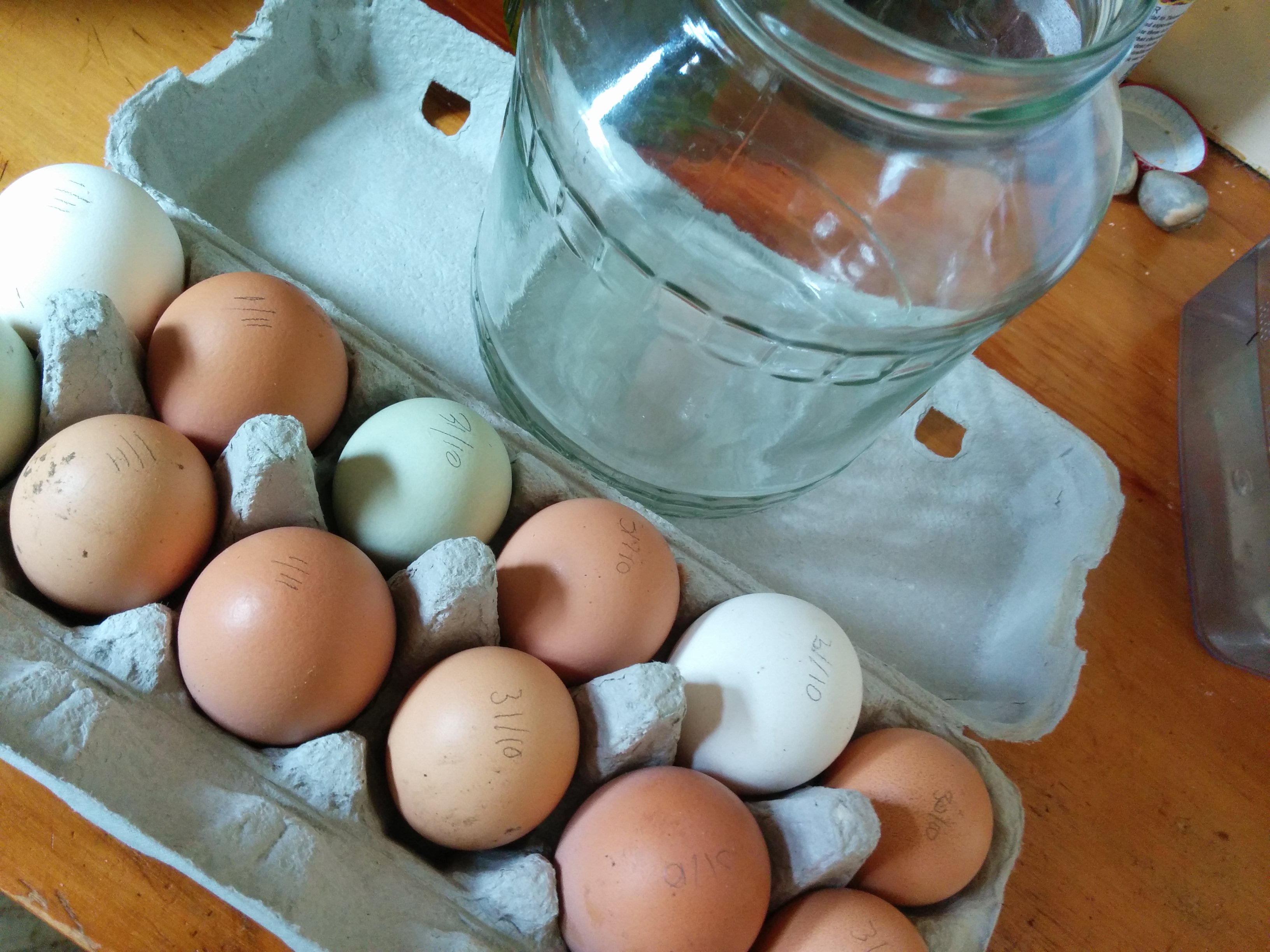
You might have gathered by now that my household’s been having difficulty keeping up with the incredible egg laying ability of my beautiful girls. This morning I had 26 eggs in the fridge, the oldest ones were only laid six days ago. I date my eggs with a pencil as soon as they come up to the house, something my mother used to do to keep track, and as you can see from the photo below, some of them are quite gigantic!

A dozen free range eggs and an old pickle jar, waiting to get together!

A dozen free range eggs and an old pickle jar, waiting to get together!

So, I decided to make very old fashioned Pickled Eggs. I haven’t had these since I was a child (yes – that long ago!) when my mother used to make them occasionally when we had a glut.

I still have some dried chilies from last year’s crop, so decided to use one in the pickling brew, along with allspice berries and a couple of bay leaves I dried a few years ago from a friend’s tree. The vinegar was mostly home made thanks to a vinegar “mother” my dear friend Sara gave me last year (see yesterday’s post about Sara – she’s pretty wonderful!) and topped up with some shop-bought white vinegar. Older eggs are actually better for hard boiling, as they’re easier to peel, so a few of mine have a few “dents” in them!

IMG_20151105_112000

Old jars are something of a passion of mine and the one I used here has been home to many delicious creations. To sterilise it, I washed it thoroughly in hot soapy water, rinsed it well and put it in the oven (about 120 C) until all the water had evaporated. The lid went in a saucepan of clean water and simmered for 10 minutes. Here’s the recipe:

Pickled Eggs 

Ingredients:

12 hard boiled eggs, peeled          a clean, sterilised pickle jar and lid           approximately 4 cups of vinegar

1 dried chili                 2 bay leaves                4 or 5 allspice berries       1 teaspoon sugar          a pinch of salt

Method:

Start by boiling the eggs for 8-10 minutes (you want them really hard for this). Once they’re cooked, plunge into cold water and tap each to stop them cooking any further. Put the clean, wet jar in a low oven to sterilise. In a saucepan, heat the vinegar, stir in the sugar and salt until dissolved with a wooden spoon. Add the allspice, chili and bay leaves and cover, reducing the heat. Simmer for about ten minutes. While it’s simmering, peel the eggs carefully, wash them in cold water to remove any tiny pieces of eggshell and put aside in a bowl.

Check the jar, if the water is completely evaporated it’s ready to use. Carefully remove it from the oven and put it on a board, preferably on the stove top next to the simmering pickle (this reduces the risk of spills and accidents). Take the sterilised lid out of the water with tongs and put it on the board to cool. Put the wooden spoon in the jar and roll the eggs in gently. Then, very carefully and slowly pour the hot vinegar and spices over the spoon and make sure the eggs are covered. Put the lid on firmly to create a seal and leave to cool. Label and date your jar and put them in a dark cupboard. They should be ready in 4-6 weeks – I’ll be trying mine on my birthday – and they will keep for up to a year.

The finished Pickled Eggs

The finished Pickled Eggs

What pickles do you love to make? Let me know in the comments 🙂 

The Joy of Friendship – Day 4 NaBloPoMo 2015

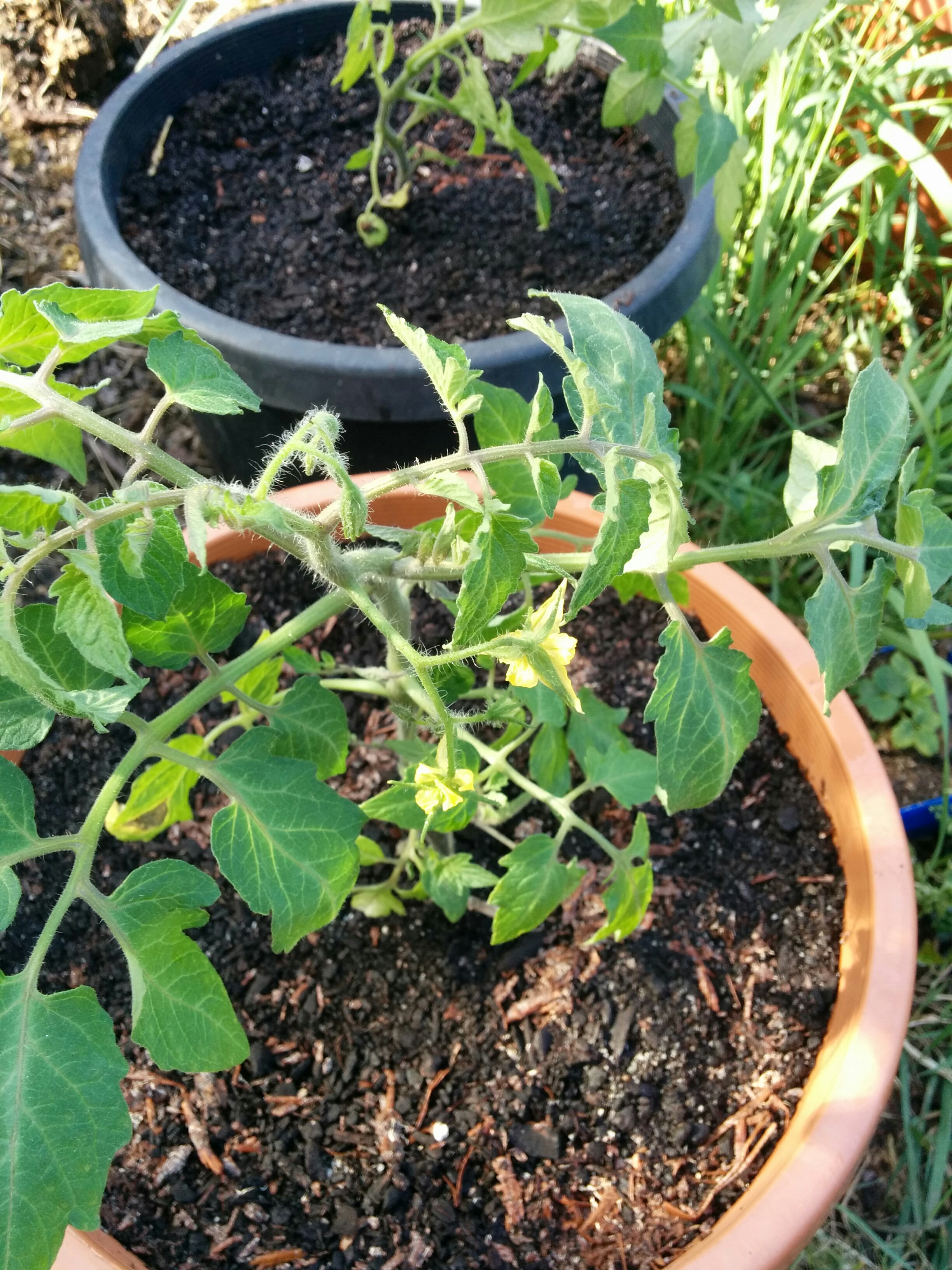
Today I had a proper day off and visited my friend Sara. Like me, she’s a creative soul – a writer, gardener and chicken fancier. I took a couple of bush squash seedlings and she gave me a few Roma tomatoes and a bag of fresh lemons off her heavily laden tree. (With all the eggs I’ve got at the moment, I feel a Lemon Meringue coming on in the next few days!) We catch up every couple of months, last time we did a big seed swap and laughed ourselves silly around her dining table.

My new Roma Tomato plants, potted up and ready for staking

My new Roma Tomato plants, potted up and ready for staking

Her garden is amazing, it’s quite small and she’s made fabulous use of the space, with fruit trees espaliered against a north facing fence, an unwanted bathtub the perfect home for strawberries and blueberries, tight block plantings bordered with container salad vegetables, a very efficient and productive greenhouse and an ingenious enclosed corner for her two chickens that can be wheeled across fallow beds.

Sara is also a nationally renowned psychic and astrologer and has been writing professionally for years, contributing regular columns to some of the best known magazines in Australia. She also has her own business Stargold and does readings for clients both in Australia and worldwide.

Over coffee, we worked out we’ve known each other for just over 30 years. We’ve shared houses, seen each other through numerous loves and break-ups, pregnancies, child-rearing and (more recently) health issues and growing into middle age as stylishly and (dis)gracefully as possible.

I treasure her friendship very, very much for two major reasons. Firstly, even if we haven’t seen each other for years there’s never any uncomfortable silences – we always manage to pick up wherever we left off without reservation. Secondly, despite the years we still have the capacity to make each other genuinely laugh – a truly priceless gift.

A heart-shaped Strawberry discovered in my garden

A heart-shaped Strawberry discovered in my garden

Baked Cheesecake – Day 3 NaBloPoMo 2015

Henrietta, Queen of the Chicken Coop

Henrietta, Queen of the Chicken Coop

My six gorgeous girls are working overtime at the moment and I’ve got a glut of eggs. I give them away to family but even so, they keep on laying. It probably has something to do with all the weeds I’ve been pulling out of the garden these past few weeks, which are full of delicious insects and worms!

So, even though I should be studying, with so many eggs on hand I thought I’d make a cheesecake with a twist.

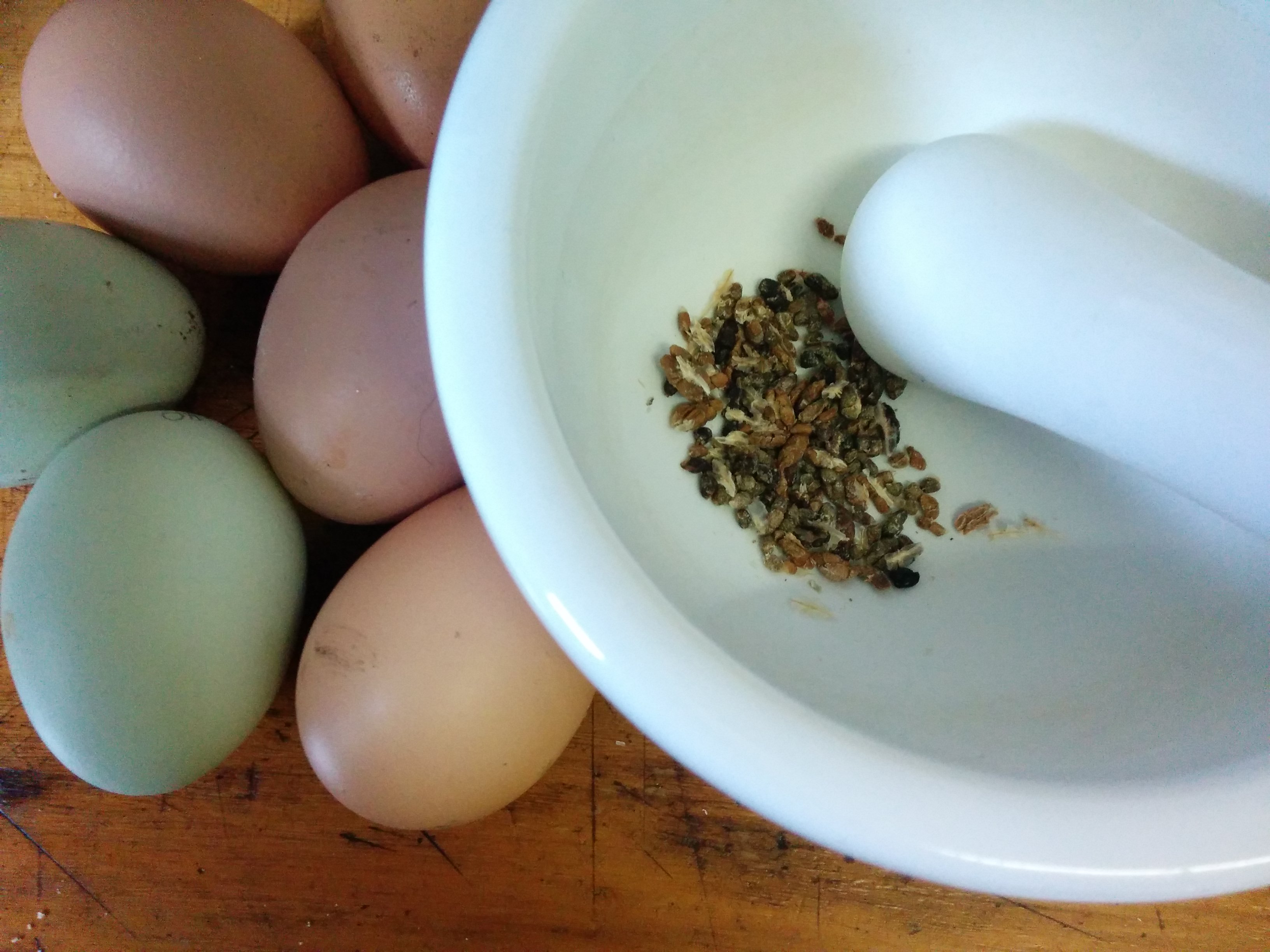
Cardamon seeds, ready to grind - and six of the best from my chickens

Cardamon seeds, ready to grind – and six of the best from my chickens

I love the aroma and taste of cardamon in both savoury and sweet dishes, and it works superbly with citrus. Not having any oranges in the house, I got creative and put four tablespoons of lemon juice and about a quarter of a teaspoon of Orange Blossom Water, a delicious by product of orange oil distillation. It’s a powerful aroma and a common ingredient in desserts from North Africa and the Middle East to Malta, France and Spain. Like Rose Water, use it sparingly!

Cheesecake ready for baking

Cheesecake ready for baking

Orange Blossom & Cardamon Cheesecake (8-10 generous serves)

Ingredients:

1 prepared biscuit base (for a 28-30cm spring form pan)

6 large eggs                       3/4 cup of sugar                        500g cream cheese (at room temperature)

1 tab crushed cardamon seeds     1/4 teaspoon Orange Blossom Water (or more to taste)      4 tabs lemon juice

Method:

Break the 6 eggs carefully into a blender jar, add the sugar and cover. Pulse until the eggs are frothy and the sugar is combined. Spoon the softened cream cheese in, cover and blend until smooth. Add the crushed cardamon seeds (I do mine by hand, shelling seed from whole pods and grinding in a mortar and pestle – the flavour is much better!), the Orange Blossom Water and lemon juice. Blend this on a low setting until combined.

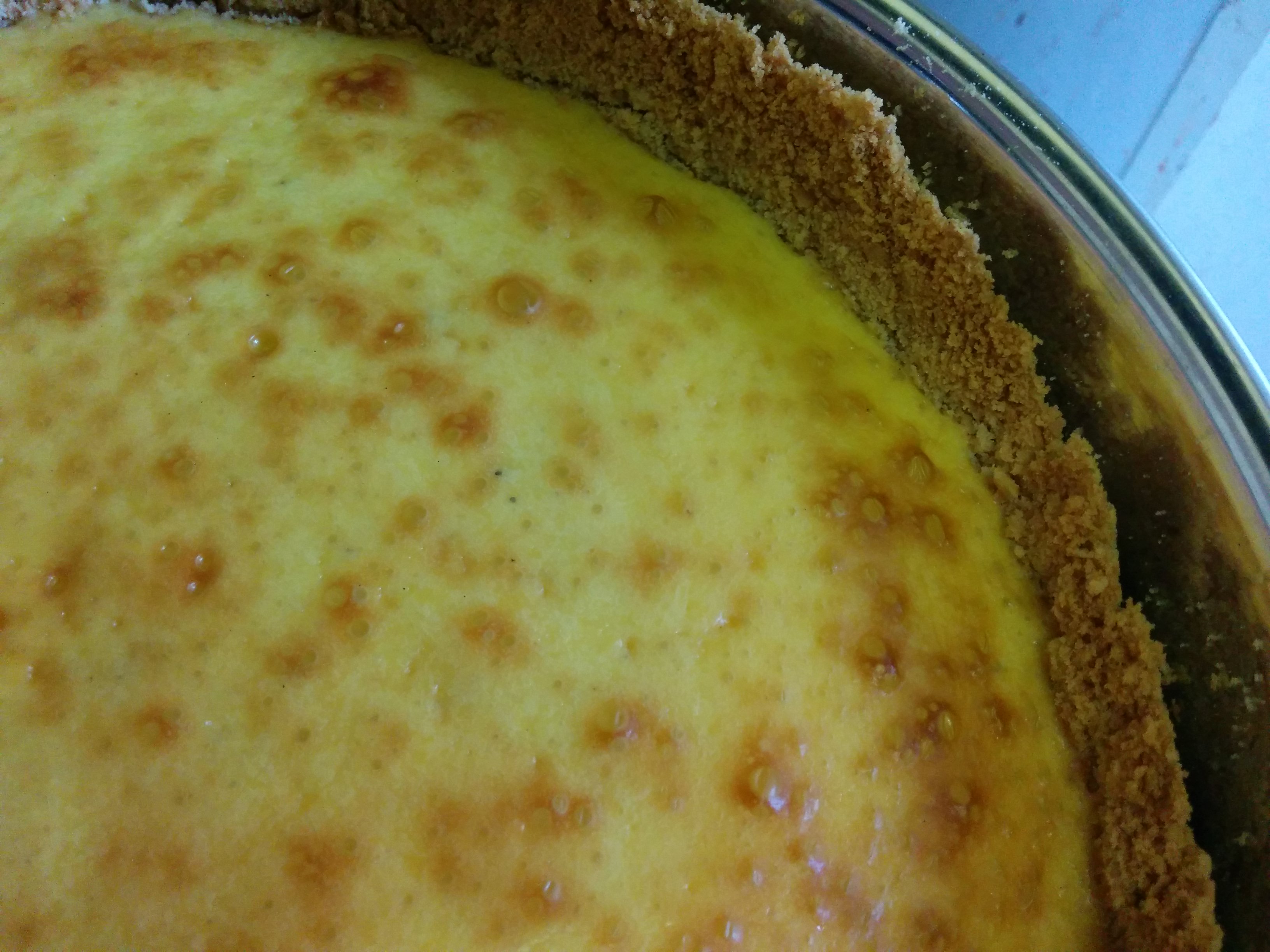
Pour this luscious mix into the base and bake at 150 C for approximately 45 minutes. I usually leave my cheesecakes to cool in the oven before refrigerating them. You could put sliced fresh strawberries or apricot on top – they go very well with Orange Blossom Water – or leave it perfectly plain. Either way, this is a delicious twist on an old favourite and I hope you enjoy it as much as my family and I did 🙂

The finished cheesecake, with tiny flecks of ground cardamon visible

The finished cheesecake, with tiny flecks of ground cardamon visible

What are your tips for using excess eggs? Please leave a comment below!


The Blog Challenge – NaBloPoMo 2015

Hi everyone,

It’s coming towards the end of the year (where did the last twelve months go?) and that means we’re getting close to National Blog Posting Month – NaBloPoMo.

The challenge is to write a blog post every day for the month of November and it’s really quite challenging to keep it fresh and interesting – from a writing perspective as much as for the audience. I’ve done it once before, two years ago. I had no home internet connection and did the whole thing from my mobile phone. If I can do that, this year is going to be easy 😉

If you’re inclined to challenge yourself writing-wise, click on the badge in the sidebar and get involved. It’s really a lot of fun and I personally found it a great learning experience.

Take care wherever you are ❤

The Busy-ness of Spring – Upcoming Shows

Chestnut Tree Spring Oct 2015

Hello friends,

I love spring. The cycle of the seasons visibly turns and every day brings new things in the garden, the chickens are laying more eggs than we can keep up with, and here in Hobart we’re coming out of the hibernation of winter and starting to go out again.

Rhubarb Fool

Rhubarb Fool

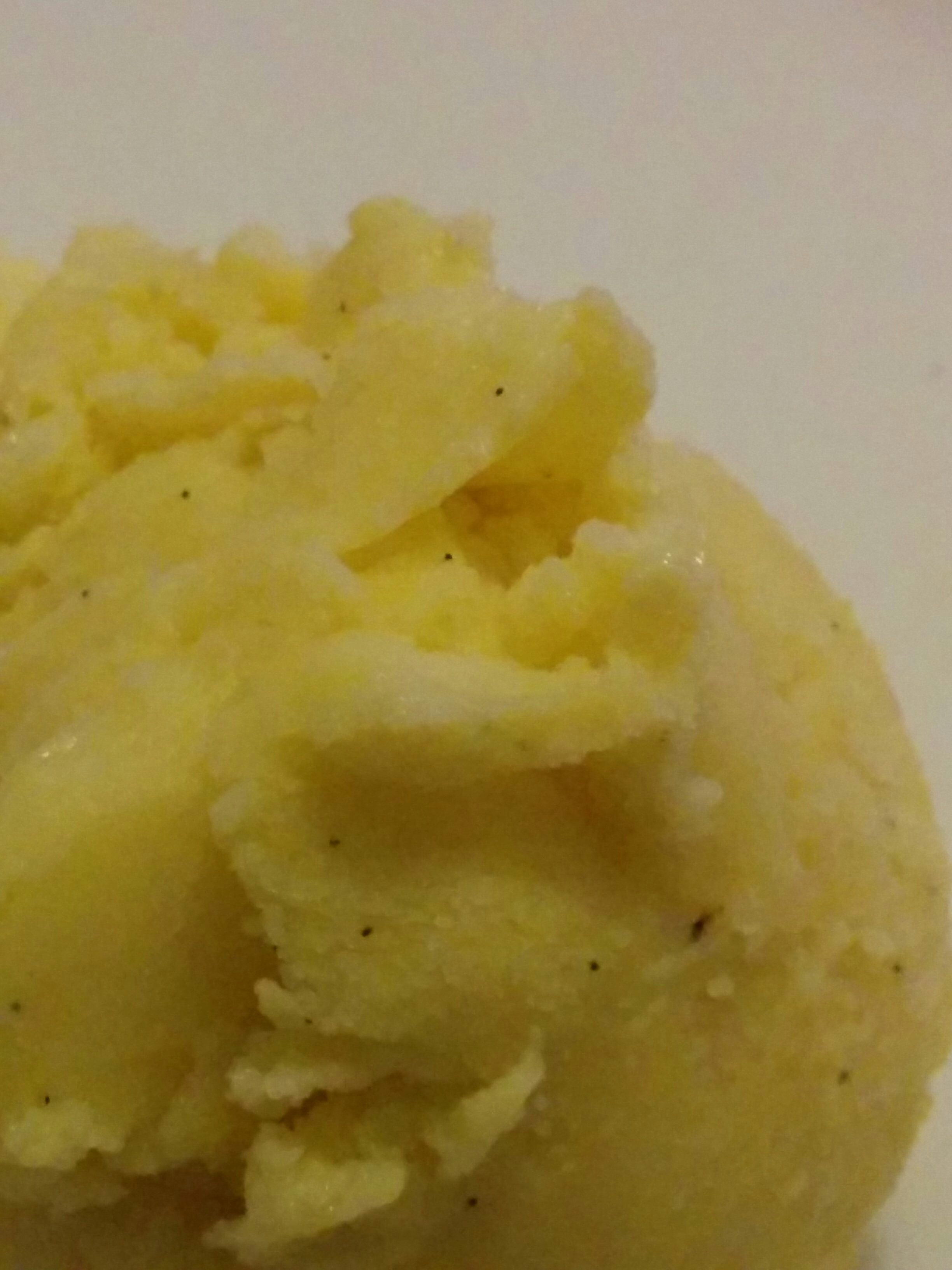
Vanilla Ice Cream

Vanilla Ice Cream

Wee Beastie Sourdough

Wee Beastie Sourdough


And I’ve been busy! In the kitchen I’ve been making Vanilla Ice Cream and Baked Coffee Cheesecake with the excess eggs, brewing and bottling cider, making Rhubarb Fool from the mass of spring rhubarb and my weekly “Wee Beastie” Sourdough. It’s been absolutely wonderful to eat so well, with so much produce coming directly out of the garden.

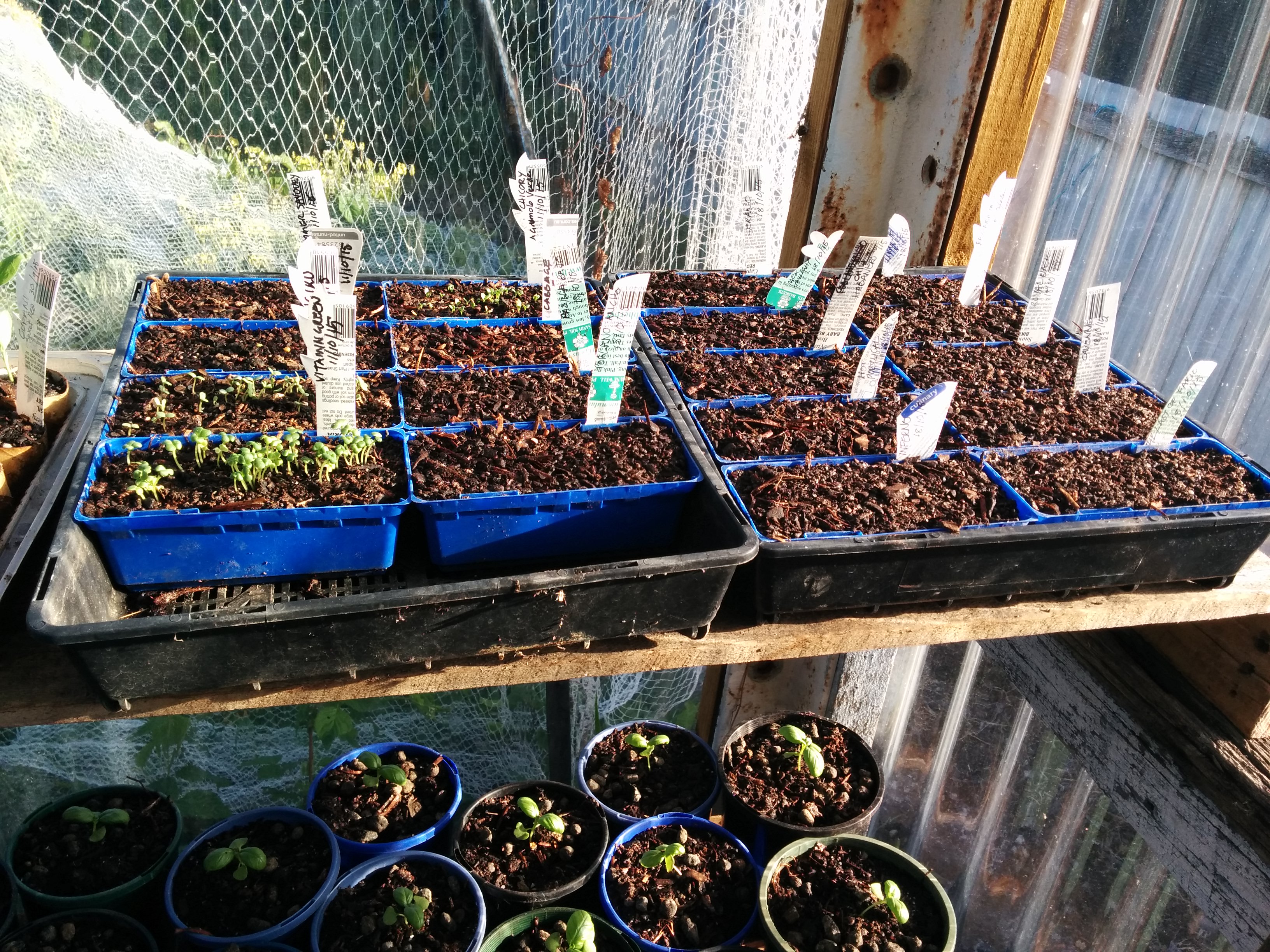
The garden is always a work in progress but I’ve started planting out climbing beans this week, there’s basil in the Seeds and Basil Seedlings Oct 2015greenhouse and too many vegetable seedlings coming on to mention.

And there’s music happening too! I’m in the middle of a unit in Creative Writing for my second major through Griffith University. For my final assessment I’m planning to write a portfolio of new pieces that will become new songs. Depending how it goes, perhaps the core of another album.

Meanwhile, there’s gigs coming up too.

This Sunday at The Brunswick Hotel in Hobart, I’m playing a short set out in The Yard (the beer garden) with a bunch of other local musicians, including the incredibly talented Cassie O’Keefe and my friend Matt Dean. Very pleased also that this is a family friendly show, so feel free to bring your young music-lovers 🙂

Thursday 19th November, I’m sharing a night with Cassie at The Homestead in Elizabeth Street, one of my favourite places to go and hang out with friends. No idea what’s going to happen that one – we might even work out some songs to play together!

Friday 20th November, I’ll be doing the early spot at The Globe Hotel in Davey Street. If you haven’t caught this weekly event yet, I really recommend it. It’s organised by Kevin Gleeson who basically loves all kinds of music and is good friends with so many of us. It’s a great excuse to hang out and have a good time with mates.

And there’s more on the horizon! If you want to keep up to date with my shenanigans, hook up with me on Facebook here.

Yep, it’s spring and it’s busy – just how I like it.

Wherever you are, be well friends ❤

The Lucky Six – Preview Time!

So, after much ruminating, listening and re-listening, I went back down to The Belfry Studios at Murdunna to remaster some tracks. There was a lot of hanging out in the sunshine with my friend and co-producer Malcolm Battersby too – it was a stunning spring day!

Between Murdunna and Dunalley

The results are pretty fine (if I say so myself) and I think The Woman on the Edge of the World is almost ready to head off for pressing. The Lucky Six is a collection of six songs by other artists that I love and have influenced me in some way. This is about ready for release as a digital download and I’ll be putting it up on SoundCloud in the coming week and putting a link here 😀

So, to celebrate this momentous occasion, I’m putting up a track from The Lucky Six for your listening pleasure. I first heard “Little Fishes” in the early 80’s, on an album called Grubby Stories by an incredible English poet and songwriter, Patrik Fitzgerald. It’s a great song and (like much of Fitzgerald’s work) had a profound effect on me. I hope you enjoy my take on it ❤

Hubble & Bubble


IMG_20150822_163129

So, the blossom is starting to show, daffodils and snow drops are popping up and the soil is starting to warm up – I think spring has finally reached Tasmania – and about time too!

I think we were all getting a little sick of the cold weather this year. A few days ago the Bureau of Meteorology announced what many of us already knew – this was the coldest winter since 1966. But that doesn’t mean the weather’s suddenly warmer.

Last weekend we had more cold weather, snow on Kunyani/Mt Wellington and more rain than we’ve seen here in the south for several months. So, I got busy indoors 🙂

Wee Beastie and Cider Kit 29 Aug 2015

The last cider brew unfortunately lost its airlock while it was still playing out and had the first faint tinge of sourness when I’d checked it the previous weekend. So, during the week, I transferred about 8 litres to a 20 litre food grade plastic bucket and put about the same amount of clean, filtered water and Mother, my vinegar plant. The rest is sealed in clean fruit juice containers and will gradually all become Apple Cider Vinegar.

In the photo below, you can see the vague shape of Mother down the bottom, doing her thing. It takes about three months to produce a good, robust vinegar, suitable for medicinal and culinary purposes. I recommend processing to arrest the yeast. This is done by heating the strained vinegar to 70 degrees C, cooling and bottling. And of course, the longer you leave the processed vinegar, the more mellow the flavours become.

IMG_20150903_134002


Meanwhile, the fermenting barrel got a very thorough clean out, all the seals checked and left to dry in the sunny laundry.

My sourdough plant I started at the beginning of the year, affectionately known at this house as Wee Beastie, was ready to make another loaf and there was a new brew of cider to put on.

The bread was pretty easy to get happening. Two cups of Wee Beastie, two cups of strong bread flour, half a cup of rye flour, a little salt and 2 teaspoons of bread improver to make the gluten work. No dry yeast necessary! I knocked the loaf together, kneading it for about ten minutes. Then, coated my hands in good olive oil, rubbed the dough with it, put it in a pan on the water heater (the warmest spot in the house!) and covered it with a tea towel.

Leaving the bread to prove, I replenished Wee Beastie with the usual half cup of bread flour and third cup of filtered water, mixed it well, covered it with cheesecloth and put it back on its kitchen shelf to start fermenting again.

The cider is always a bit of effort, because I like to use filtered water rather than straight out of the tap but usually, the results are pretty darn fine 🙂

Keeping Notes 29 Aug 2015This time I was using a Brewmate kit I bought a few months ago from a local brewing supply shop. I’ve never used this one before but its base is Australian pear juice and it comes with sparkling wine yeast, nutrient and apple flavour concentrate. I’m going to see how it plays out and taste a little before deciding to use the concentrate or not.

And, as always, I’ve taken notes on the brew, including the specific gravity, base temperature and so on. I find it easier to keep track if I write it down, and let’s face it life’s too busy to keep everything in our heads! The notebook lives with the clean bottles and brewing things and I add to the notes when bottling and again when I do the first tasting.

I use a heat pad to put the barrel on and with an even temperature, the brew started to take off by late Sunday.

While I was attending to the cider, the bread started to rise very nicely. I think sourdough loaves generally need longer to prove and this time of year when ambient temperatures are still quite low, it pays to give it that little bit extra.

But the result was a delicious light rye, with a beautiful sour tang. It’s still quite a robust, dense loaf that makes the best toast!

WB Light Rye 29 Aug 2015


Well, I must run and get some rehearsal done for upcoming gigs – more on that later 😉

Take care and see you all soon ❤

What are your best brewing and/or bread making tips? Please leave a comment – I love to hear from you all!

Previous Older Entries Next Newer Entries