Frankenstein

Frankenstein (2025)

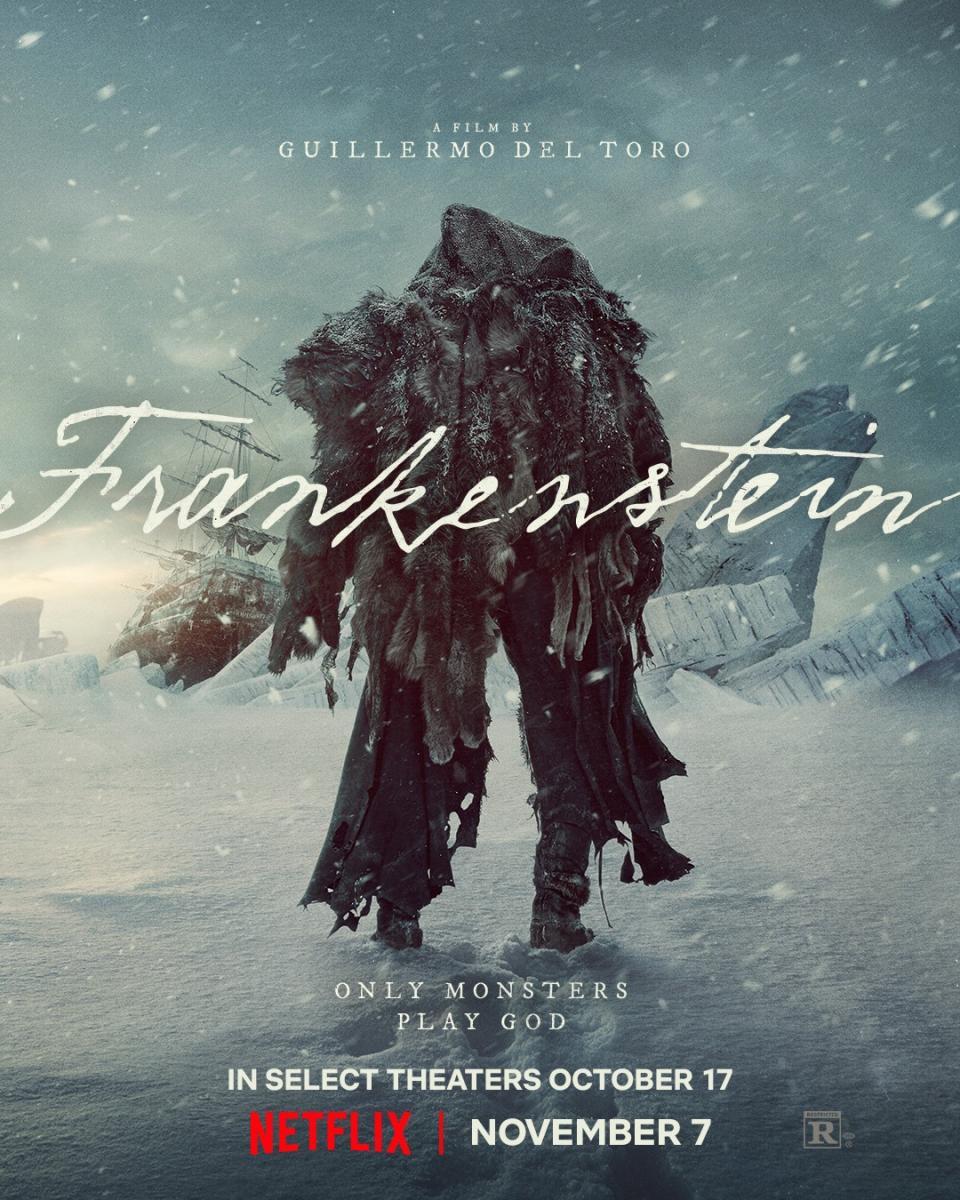
Written and directed by Guillermo del Toro, based on the book by Mary Shelley.

I went to see this a few weeks ago in the cinema and I can’t stop thinking about it for all manner of reasons. As a person with a disability, I sometimes find movies can be problematic (and often downright offensive) in their depictions of disability as “monstrous” or “horrible”. In del Toro’s Frankenstein, as in Shelley’s book, the creature is beautifully depicted, he grows as a character and has a definable arc. This creature feels, has curiosity, develops empathy and learns. Above all, he is no Monster!

“Frankenstein: or, the new Prometheus” is one of my favourite gothic novels and thanks to the success of James Whale’s seminal 1931 work starring Boris Karloff as “The Monster”, Frankenstein has become an iconic media object. As much as I love the Whale version and sequel Bride of Frankenstein (1935), I think my favourite iteration is the stage adaptation by Nick Dear performed in 2011 by the National Theatre in London and starting Benedict Cumberbatch and Jonny Lee Miller. (If you can find it, I highly recommend this version.)

Dear’s adaptation closely follows the original text, whereas del Toro’s version embellishes and adds to it, making this treatment all the more risky and interesting. The setting is later, now in the mid 19th century. Victor is older and his brother William is a young man rather than a little boy, and instead of a happy childhood, Victor and William’s father (excellently played by Charles Dance) is abusive and manipulative. Elizabeth is not an orphaned ward of the family but the niece of a new character, Harlander, played with relish and menace by the wonderful Christoph Waltz.

Overall, the production values are sumptuous. Set design, costuming, hair and makeup are all superb and this follows through into cinematography, lighting, framing and the use of colour. And the cast are as carefully curated as the sets they perform in. Oscar Isaac is perfect as the incredibly flawed and egotistical Victor Frankenstein, a man haunted by his mother’s death and his father’s abuse. Jacob Elordi is surprisingly good as the creature though despite all the prosthetics, it’s impossible to make that man look ugly! Though I’ve never thought of her as an actor with great range, Mia Goth is really good in the dual roles of Elizabeth and Victor’s mother – a truly tragic gothic heroine. But Christoph Waltz is just delicious, stealing every scene he’s in.

Grandiose, gothic and gory, this Frankenstein is epic to the point of overwhelming, and displays an over the top grandeur that del Toro has hinted at in previous films. I’m thinking here especially of the dream palace in Pan’s Labyrinth (2006) Cate Blanchett’s gorgeous Art Deco office in Nightmare Alley (2021) and the gloriously gothic mansion in Crimson Peak (2015). Detail is everything, this a movie to be poured over, dissected, examined and discussed like Elizabeth’s insects or Victor’s collection of cadavers.

Frankenstein fits well with del Toro’s previous work in tone and style and in terms of gothic sensibilities, could be seen as an extension of Crimson Peak and like its predecessor, I’m sure Frankenstein will also bear multiple viewings.

At the time of writing, Frankenstein is available to watch in selected theatres and streaming on Netflix. And as always, I highly recommend the big screen experience.

Bring Her Back – Spoiler Free

Bring Her Back (2025)

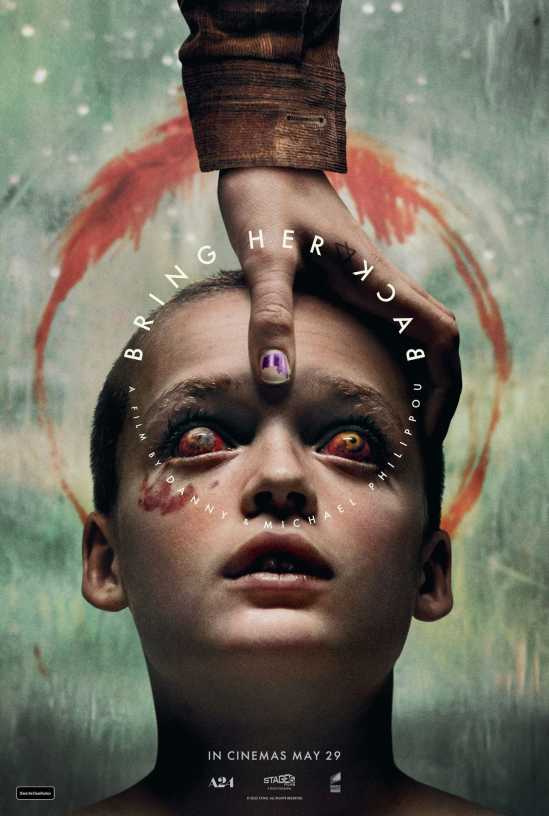
Directed by Danny and Michael Philippou. Written by Danny Philippou and Bill Hinzman

Going into this sophomore feature from the Philippou brothers, I knew next to nothing about it, and I recommend that as a default position for watching most film. So I’m going to give as little away as possible, in the hope that many of you will go and see this on the big screen and be as surprised and ultimately, entertained as I was.

I did know it was an uncomfortable watch for many people and it stars Sally Hawkins, whose work is diverse and always top notch in my opinion. As Laura, she is a force of nature and the ticket price is worth it just for her heartfelt and at times, downright desperate performance. The younger cast members are also excellent, vision impaired Sora Wong is particularly good, especially considering her lack of previous acting experience.

Bring Her Back is very intense, doesn’t shy away from depictions of gore (I can see the influence of French New Extremity clearly here) so it’s not for the squeamish. The intensity is accentuated by some great camera work (hats off to DoP Aaron McLisky), the use of tight framing that creates a claustrophobic atmosphere and the simplicity of diegetic sound, especially rain falling. The score by award-winning screen composer, Cornel Wilczek is unobtrusive and helps build audience anxiety, and at a tight 104 minutes, this film doesn’t outstay it’s welcome.

At it’s core, this is an exploration of grief from a variety of viewpoints. From the superficiality of contemporary funeral rites to the depths of darkness, guilt and depression. (As an aside, I’d love to hear US mortician Caitlin Doughty discuss and critique various funeral practices in contemporary horror, I think it’d make an excellent video essay.) The tension is maintained through a combination of great script, visuals and sound, excellent editing and exceptional performances – both in front and behind the camera.

Ultimately, I can’t describe this as an enjoyable watch, but as a lifelong horror fan I do consider it entertaining. It’s caused me to consider people I’ve lost along the way and how I’ve processed/still processing the grief, something I consider a healthy use of my time. I haven’t watched the Philippou brothers first feature, Talk To Me (2022) but after seeing Bring Her Back, I’ll be rectifying that very soon.

Bring Her Back is currently in wide distribution globally. Highly recommended.

Nosferatu – Spoiler Free

Nosferatu 2024

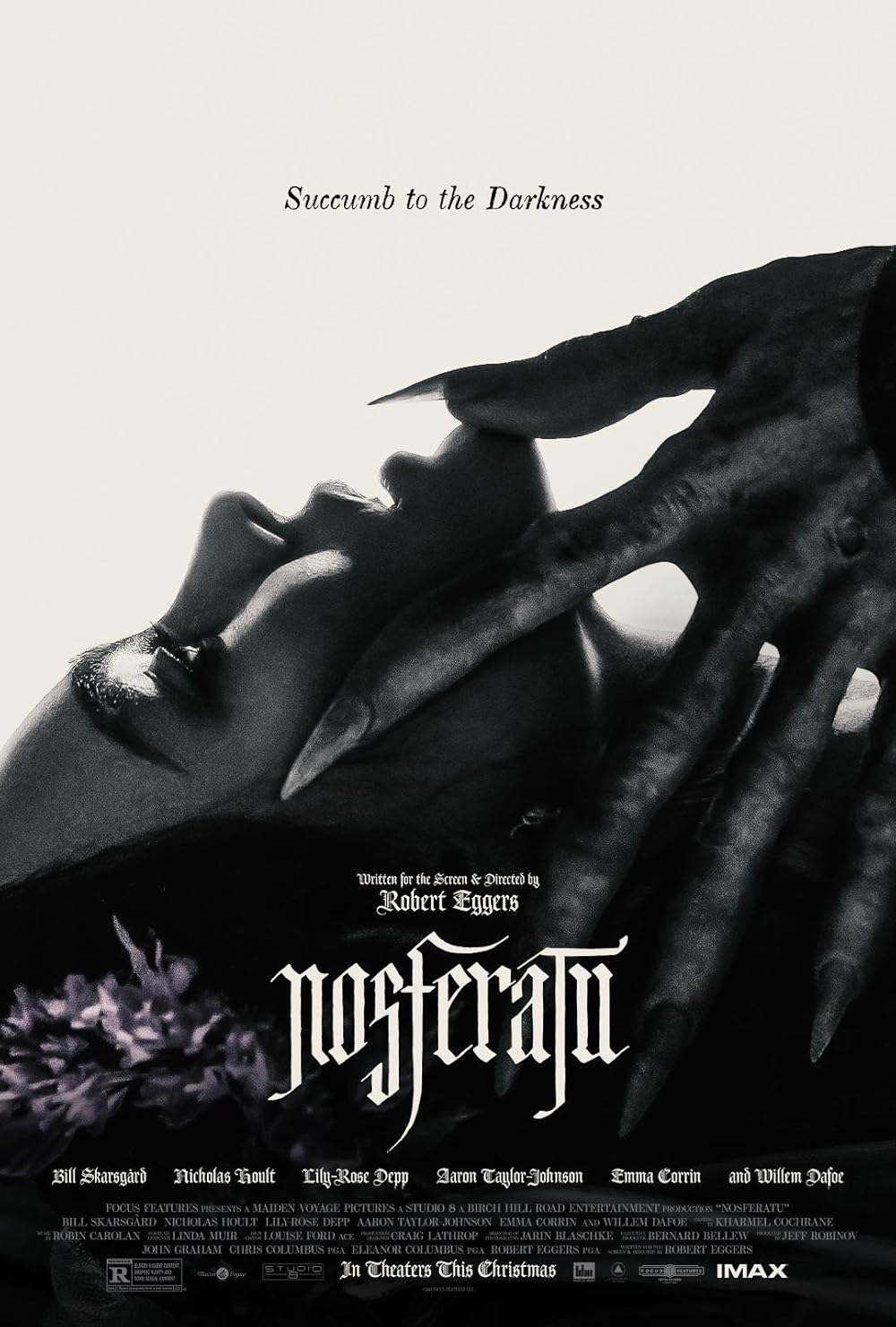
Written and directed by Robert Eggers

Its been a shaky start to 2025 so I’m a little late to the party, but I finally got to see Nosferatu yesterday at my local, the State Cinema in North Hobart. This was perhaps my most anticipated release for the last year or more and I’m a big fan of Eggers’ work, my favourite being The Lighthouse (2019).

This is Eggers’ fourth feature and I feel he’s firmly secured his niche in folk horror, especially retelling of mythic stories for modern audiences. However, I felt this remake of F. W. Murnau’s 1922 silent classic wasn’t quite up to par. There are several interconnected factors here, which I’ll try to tease out without spoiling anything.

On the plus side, Eggers’ regular cinematographer, Jarin Blaschke is back, creating darkly beautiful and quite memorable visuals – I really can’t fault his work! As with his previous features, the framing and lighting are superb, creating painterly, gothic scenes that stay in the mind long after leaving the cinema. Similarly, the art direction (Robert Cowper, Paul Ghirandani), set decoration (Beatrice Brentnerova) and costume design (Linda Muir) are near perfect.

The sound design is, for the most part quite good. There is a visceral quality to the diegetic and foley sound in some scenes that adds depth to the horror but the soundtrack by Robin Carolan is disappointing. At times overbearing, it often makes the classic mistake of telegraphing to the audience “this is what you must feel &/or think” in key scenes. As a musician, this is one of my pet peeves, and it displays a lack of trust from the filmmaker that audiences can discern what’s going on without being beaten over the head by aural as well as visual cues. For the most part 21st century audiences are a lot more cineliterate than filmmakers give them credit for!

I suspect one of the reasons Carolan’s score is so bombastic is to push the action. Nosferatu is a slow and cumbersome beast to begin with, mostly I suspect because Eggers is trying to do justice to not only the Murnau version but Bram Stoker’s original novel and the multitude of media objects and resultant tropes that have arisen from such an iconic and foundational story in folk horror. This is also evident in the pacing and I take off my hat to film editor, Louise Ford (another Eggers regular), this would’ve been a nightmare to edit! I also wonder if this is why Eggers relied so heavily on jump scares, particularly in the first half of the film.

For the most part, the cast are excellent, with Nicholas Hoult showing yet again what an accomplished actor he’s become. Emma Corrin, Aaron Taylor-Johnson, Ralph Inerson and Willem Dafoe are all fine and, although he was under a lot of make up and prosthetics, Bill Skarsgard was suitably overbearing and downright horrible as Count Orlok. (By the way, I loved Orlok’s ‘tash – it was appropriate to the period and place.)

Sadly, the glaring exception is Lily-Rose Depp. Visually, she fits the part of Ellen Hutter superbly – she is the perfect poster girl for gothic loveliness and Jarin Blaschke’s camera loves her! Unfortunately, as soon as she opens her mouth, all bets are off as she chews the scenery with way too much vigour. Ellen is (with Orlok) arguably the central character and I’m aware that it’s a lot to ask of any actor but I feel this was just a step too far out of her range. To add insult, there is negligible chemistry between her and on-screen husband Nicholas Hoult as well as Bill Skarsgard’s Count and I was continually pulled out of the story by this.

Nevertheless, Nosferatu is obviously a passion project for Eggers and a wildly ambitious one at that. When it works, it’s great and, for the most part, (especially visually) it works. Its not perfect – but then, nothing is.

Nosferatu is currently in wide cinema release globally and I encourage everyone to see it just for the gorgeous cinematography. Let me know what you think!