The Odyssey (2026)
Directed by Christopher Nolan. Screenplay by Christopher Nolan from Homer.
There’s been controversy around the release of Christopher Nolan’s film, with some saying there aren’t any Greek actors in major roles, racists demanding a white Helen of Troy (and the rest of the cast) and even some idiots demanding to know why it isn’t “historically accurate”. I haven’t read the most recent translation by Emily Wilson but she delivered a scathing review, bemoaning the poor quality of the script, lack of depth and general movement away from Homer’s themes. I was lucky enough to grow up in a relatively bohemian household of musicians and makers and we read a LOT of books. Some of my earliest memories are the myths and legends of many cultures, often as bedtime stories from my parents and I’ve read various translations of The Odyssey (especially the Robert Fagles) multiple times. I’m not a classicist by any means but The Odyssey as a text was well known to me before going into the cinema.
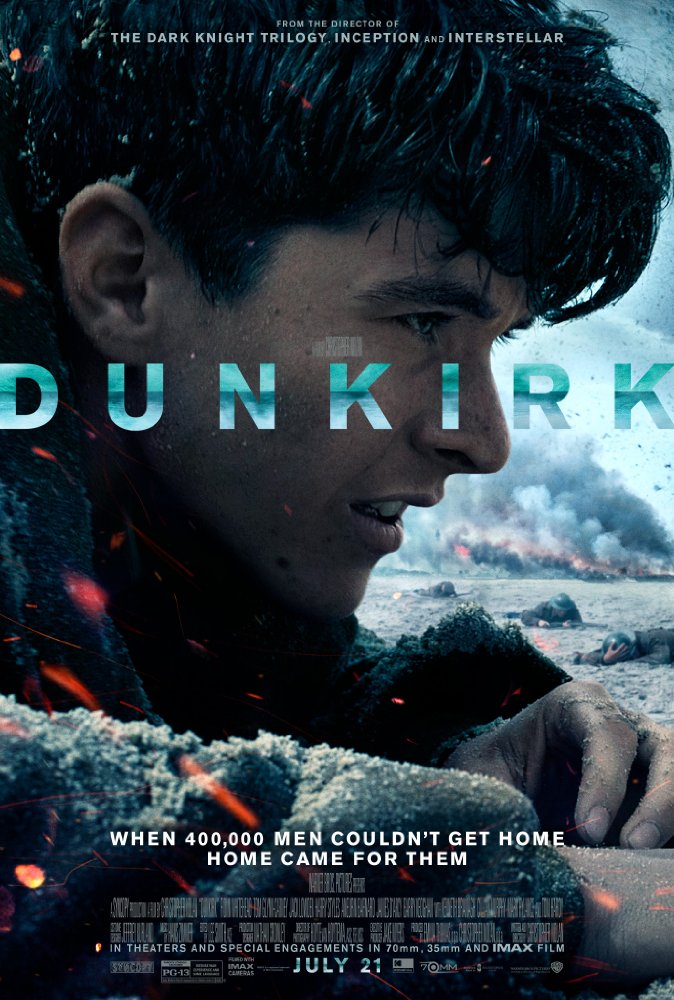
I saw The Odyssey recently at the Hobart Village Cinema. We have no IMAX in Tasmania, so I opted for the reclining seats of Gold Class, friends and snacks. After all, I was going to be there for just over three hours, I might as well get comfortable! Seriously, I needn’t have bothered, despite the long runtime, the film flew by and I said to my friends as we were walking out I’d happily go back and watch it again immediately! This is testament to the incredible editing skills of Jennifer Lame, a frequent Nolan collaborator. Similarly, the cinematography by Hoyte van Hoytema (Interstellar, Oppenheimer, Tenet, Dunkirk) is all at once glorious, sweeping vistas and intimate close-ups. The original score by Ludwig Goransson is equally beautiful and rousing in good measure and blends beautifully with the overall sound design. I really appreciated the use of forced perspective and in-camera effects but should also mention that some of the CG didn’t hold up for me, especially the Scylla, which I found particularly jarring.
Yes, it is very different to the translations I’ve read before or seen on the screen. The cast are uniformly excellent, Matt Damon’s Odysseus is a much better (dare I say “nicer”?) man in the modern context than written translations, where Odysseus is far more of a trickster and there was a good deal of extramarital sex on his way back to Ithaca and Penelope. (Seven years with Calypso and a year with Circe!) Here the accent is more on Odysseus as a man trying to remember what he’s lost, and as he remembers, regretting many of his poor choices and bemoaning the futility of war. Throughout he is haunted by a vision of Athena (underplayed excellently by Zendaya) and the nymph Calypso (the also excellent Charlize Theron). Nolan uses his signature bending of time to blend many of these sequences. I also appreciated some homoerotic undertones between Robert Pattinson’s Antinous and Tom Holland’s Telemachus in the opening act and the horror subtext throughout the second half especially.
Despite all this, Nolan’s film is a far more family-friendly version of the text. The notable exceptions to this are Elliot Page’s Sinon and the incredible Samantha Morton as Circe. Both are heartbreaking and horrific and I would’ve liked to see more of both their stories, though strictly speaking, Sinon belongs with Virgil’s Aeneid and doesn’t appear in The Odyssey text at all. For me, Samantha Morton steals the film – she is the character I consistently come back to when thinking about this film. However, if I have a serious criticism of the film, it’s how Nolan has dealt with the women of The Odyssey. For me, too much is left out of all their stories but Helen of Troy is very poorly served indeed. The problem of course is, what would be sacrificed to the cutting room floor in order to do justice to these important characters and what would that do to the flow of the edit?
This film is an epic blockbuster in the classic style. I’m thinking here of directors such as Kubrick, Wyler and especially David Lean. And despite the mythological subject matter, ultimately I found it a particularly human and timely film about the idea of home, belonging and a powerful meditation on the futility of war. I loved it and if ever I get the chance, I’d love to see it in a dedicated IMAX cinema.
In conclusion, I thoroughly enjoyed The Odyssey and recommend it to anyone who likes Nolan, epic tales, solid modern filmmaking and bravura performances. I must lead a sheltered life because it’s come as quite a surprise to me that not everyone knows about Helen of Troy, the Trojan Horse, Ithaca or Odysseus and his journey back to his wife, Penelope. If nothing else, I fervently hope this version from Christopher Nolan will encourage new generations to discover the epic poem that has informed western storytelling in every way imaginable. And I think that’s the best way to approach this movie – as a 21st century cinematic interpretation of a text that began life as a spoken word story back in antiquity.
***A quick afterword, apologies it’s taken me so long to get my thoughts about this film ordered enough to make a coherent review. Life also (inconveniently) got in the way! Please leave a comment, let me know what you think – especially if you’ve seen this in IMAX, I will be jealous!***