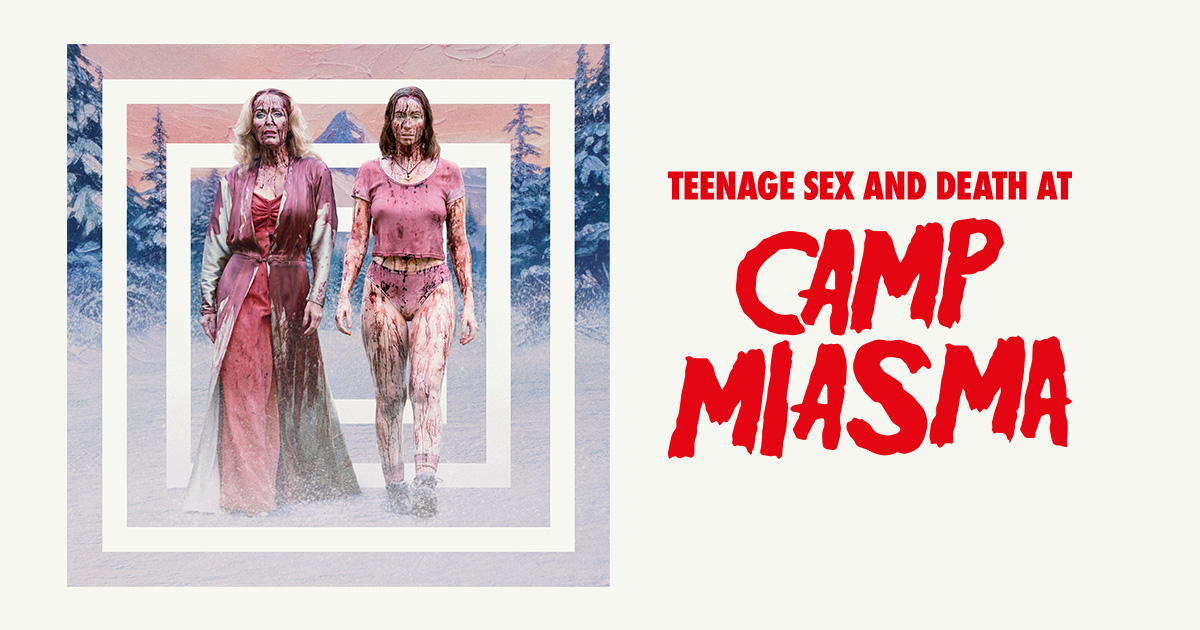
Teenage Sex and Death at Camp Miasma (2026)
Written and directed by Jane Schoenbrun.
Several friends have been telling me to catch up with the films of writer and director Jane Schoenbrun, in particular We’re All Going to the World’s Fair (2021) and I Saw the TV Glow (2024). Their work has been on my radar for some time but life keeps getting in the way of movie viewing. Well, last weekend I finally popped my Schoenbrun cherry!
Although the title is an absolute giveaway, I went in blind to this, managing to avoid trailers and reviews. I went to the State Cinema in North Hobart with friends, all of us horror fans though I have to say I’m more of a folk horror than slasher girl. Personally, I’ve always found the misogyny embedded so deeply in classic slasher films to be off-putting in many ways. But this is a film about movies and movie making – and through a decidedly queer lens. With all that in mind, in happy to say I really enjoyed this movie, and found myself laughing out loud a number of times.
The cast are excellent throughout but the two leads carry the film with ease. Hannah Einbinder brings a particular kind of fangirl intensity and simultaneously, endearing naivety as movie director Kris, who wants to revive the Camp Miasma franchise. Without giving anything away, the online pitch meeting was absolutely hilarious! Gillian Anderson is stunning as Billie, the “final girl” from the original Camp Miasma films. She is like a cross between Norma Desmond from Sunset Boulevard and Dolly Parton. I found her performance utterly riveting, in a similar mold to Demi Moore in 2024’s The Substance.
The staging is particularly interesting, a combination of real locations mixed with painted backdrops, offering frames with a decidedly Wes Anderson whimsy. While this might sound at odds with a film of this nature, it worked really well for me. Similarly, the physical effects and use of film blood are hilariously over the top right from the very start, which adds to the feeling of unreality and other worldliness. There are many, many nods to classic and horror cinema, especially Cronenberg and themes of body dysmorphia and relationships with technology are prominent. It is a love letter to horror movies in general and slasher movies specifically, but also a deconstruction of the subgenre and an examination of fetisisation in slasher films, gender roles and representations, all executed in a very playful manner.
In conclusion, like all horror, Teenage Sex and Death at Camp Miasma isn’t a movie for everyone. However, I found it a darkly comedic, surprisingly entertaining and satisfying watch, prompting me to seek out more work by Jane Schoenbrun.
Teenage Sex and Death at Camp Miasma is currently in wide release globally. As always, I’m interested to hear what you think. Leave a comment or send a message with your thoughts.


 Debra Manskey